Why Damast
Your team learned git on GitHub. Your forge should know that.
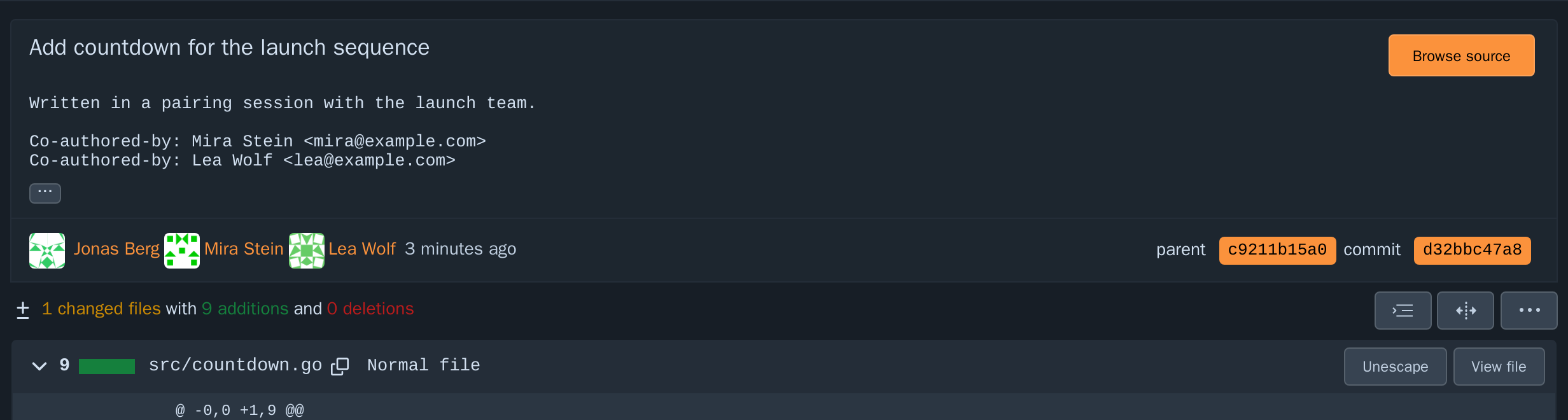
Pull requests, Co-authored-by trailers, packages that sit next to the code they came from, workflows that publish with their own token. Nobody calls these features anymore. They are habits.
When a team moves to a self-hosted forge, every habit that doesn't carry over becomes a small daily papercut. Someone pairs on a fix and their name disappears. A collaborator can push code but can't publish the package it builds. A workflow needs a personal token for something GitHub does out of the box. None of it is a big deal alone. Together, it's why teams drift back.
Forgejo is a great forge with ideas of its own: independence, community governance, federation. It deliberately doesn't try to be GitHub, and that's a good choice for Forgejo.
Damast makes the other choice. Where Forgejo and GitHub work differently, Damast leans toward GitHub.
Not the look or the logo. The way things work: who gets credit, who can publish, what a token may do. That is an opinion, and plenty of Forgejo users won't share it. Damast doesn't ask you to give up Forgejo. It is Forgejo with a different set of defaults on top, and you can take them off again.
Why the name? Forgejo is Esperanto for forge. Damast is German for Damascus steel: what comes out of a good forge when you fold layers together until each one shows in the blade. Every Damast release is a Forgejo release with a thin, visible layer on top. Every commit a layer.